



You wake up, cough a few times, clear some mucus from your throat and feel better. By the time you’ve had breakfast, you’ve probably forgotten about it.
Then the next morning, it happens again.
An occasional cough is usually nothing unusual. But when you’re coughing up mucus every morning, it’s worth asking what’s behind it.
Coughing up mucus every morning can be linked to postnasal drip, a recent respiratory infection, smoking or air pollution, asthma, chronic bronchitis, bronchiectasis or acid reflux. The time of day alone cannot tell you what’s causing it. If your cough has lasted two weeks, get it checked.
Why Do You Cough Up Mucus in the Morning?
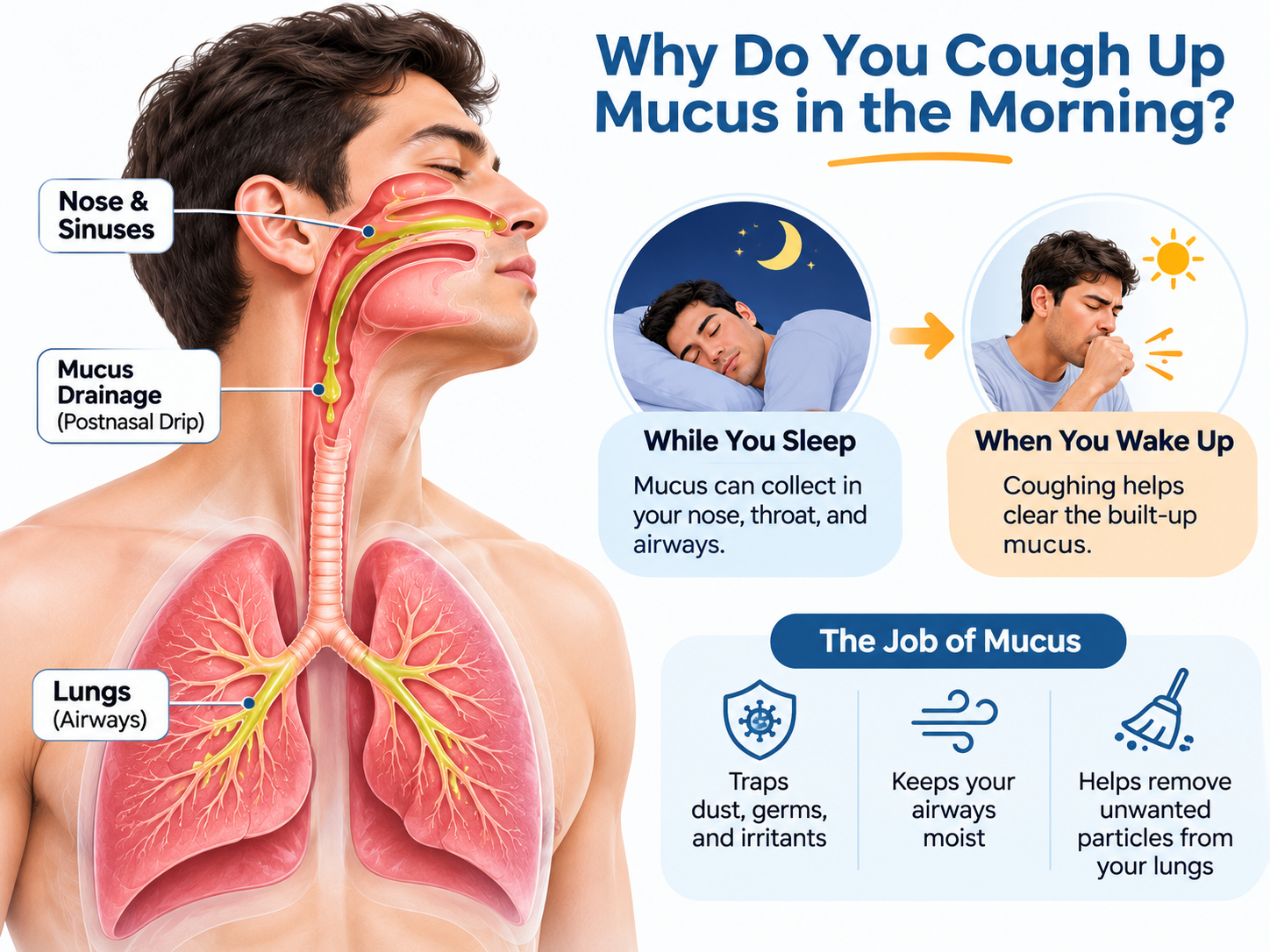
Your body makes mucus all the time, even when you’re healthy. Its job is to catch dust, germs and other particles before they reach deeper into your lungs.
While you’re asleep, mucus from your nose and throat can collect. If your airways are irritated, they might produce more than usual. When you wake up, coughing helps clear it.
The American Lung Association explains that mucus is part of the lungs’ natural defence system. Having some is normal. A noticeable change in how much you’re producing, though, is worth paying attention to.
7 Reasons You Might Be Coughing Up Mucus Every Morning
1. Allergies and Postnasal Drip
Does it feel as though something is constantly stuck at the back of your throat?
You could be dealing with postnasal drip. This happens when mucus from your nose or sinuses runs down your throat, often becoming more noticeable when you’re lying down.
Allergies are a common trigger. You might also have a stuffy nose, sneezing or the urge to clear your throat throughout the day.
2. A Cold or Chest Infection
Sometimes your cough outstays the cold that caused it.
Even after the runny nose and sore throat have disappeared, your airways can remain irritated for a while. That irritation can leave you coughing up phlegm, particularly when you first get out of bed.
Most cases of uncomplicated acute bronchitis are caused by viruses, according to the CDC. Antibiotics usually aren’t needed.
If your symptoms are getting worse or you have a persistent fever, get medical advice. Severe difficulty breathing needs emergency care.
3. Smoking and Polluted Air
People who smoke sometimes get so used to their morning cough that they stop noticing it.
Cigarette smoke irritates the airways and damages the tiny hair-like structures that help move mucus out of the lungs. Over time, clearing that mucus becomes harder.
It’s not just cigarettes, either. Dusty workplaces, chemical fumes, secondhand smoke and polluted air can all irritate your airways. Read more about respiratory diseases and air pollution in India.
A cough you’ve had for years isn’t necessarily a harmless one.
4. Chronic Bronchitis and COPD
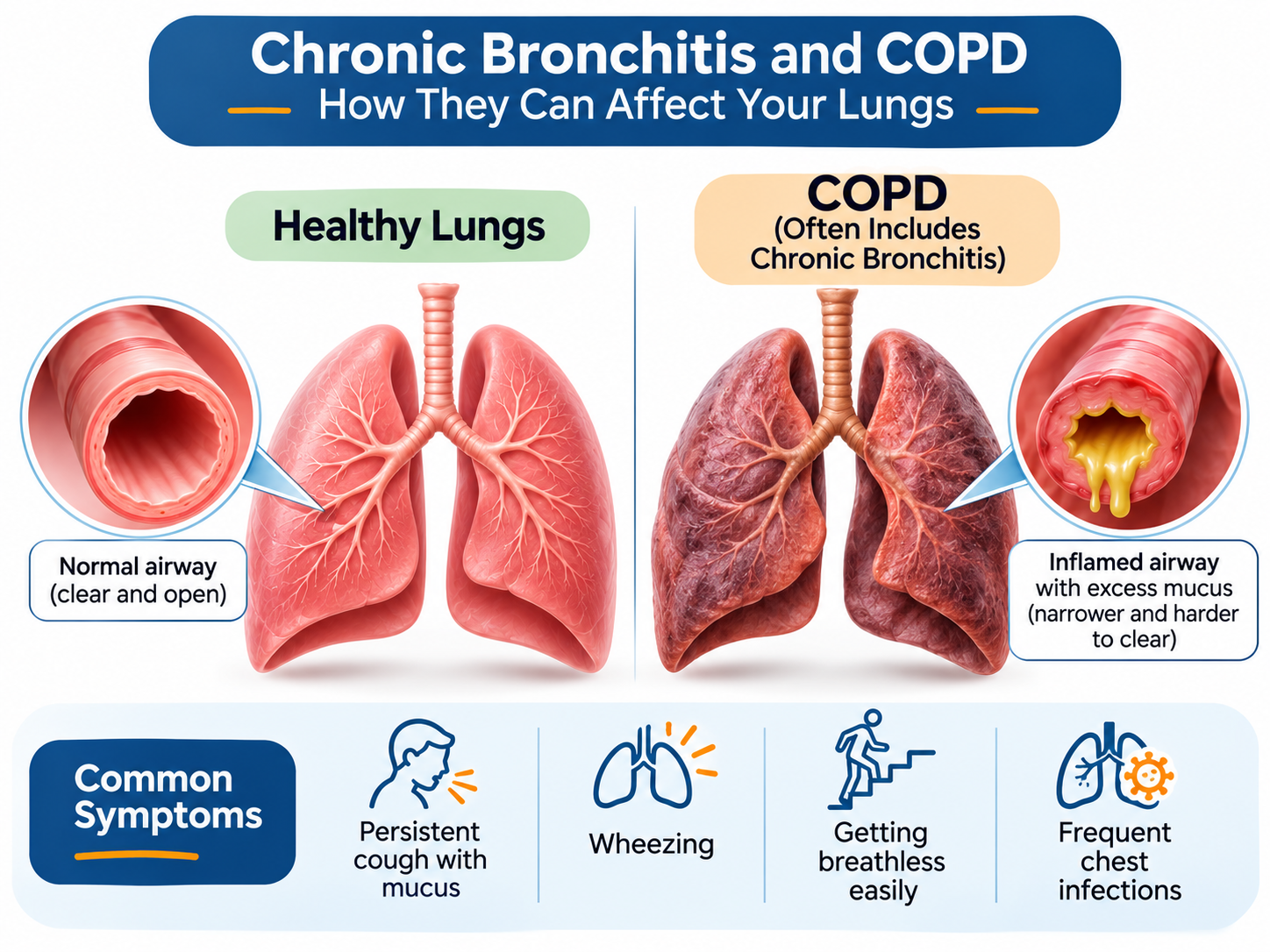
If your cough has been going on for months, particularly if you’re bringing up phlegm most days, chronic bronchitis is one condition a doctor may consider.
It causes ongoing inflammation in the airways, leading to frequent coughing and mucus production.
Chronic bronchitis is often associated with COPD (chronic obstructive pulmonary disease), a long-term condition that makes it harder to breathe.
You might notice other changes too. Perhaps climbing stairs leaves you more breathless than it used to, or you’ve started wheezing and getting chest infections more often.
That doesn’t mean everyone with a morning cough has COPD. Many conditions cause similar symptoms.
Doctors use a breathing test called spirometry to help confirm COPD.
Source: GOLD — International COPD Guidelines
5. Asthma
Not everyone with asthma wheezes all day. For some people, coughing is more noticeable at night or first thing in the morning.
Asthma causes inflammation in the airways. Along with coughing, it can bring chest tightness, wheezing and shortness of breath. Some people produce extra mucus as well.
Cold air, dust, pollen and smoke are common triggers.
If your morning cough often comes with a tight chest or noisy breathing, asthma is worth discussing with your doctor.
6. Bronchiectasis
Bronchiectasis isn’t as widely known as asthma or COPD, but it can cause a cough that produces mucus every day.
The condition damages and widens parts of the airways. As a result, mucus doesn’t clear as easily, and chest infections can become more frequent.
Some people cough up quite large amounts of phlegm. Others mainly notice that their cough never really goes away.
The National Heart, Lung, and Blood Institute lists persistent coughing with mucus and repeated chest infections among its symptoms.
7. Acid Reflux
Your lungs aren’t always responsible for a morning cough.
Acid reflux, where stomach contents flow back into the food pipe, can irritate your throat and trigger coughing. It’s sometimes worse after a meal or when you lie down.
You might also notice heartburn, a sour taste in your mouth or a feeling that something needs clearing from your throat.
Reflux doesn’t necessarily mean you’re producing extra mucus in your lungs, but it can leave you feeling that way.
What Does the Colour of Your Mucus Tell You?
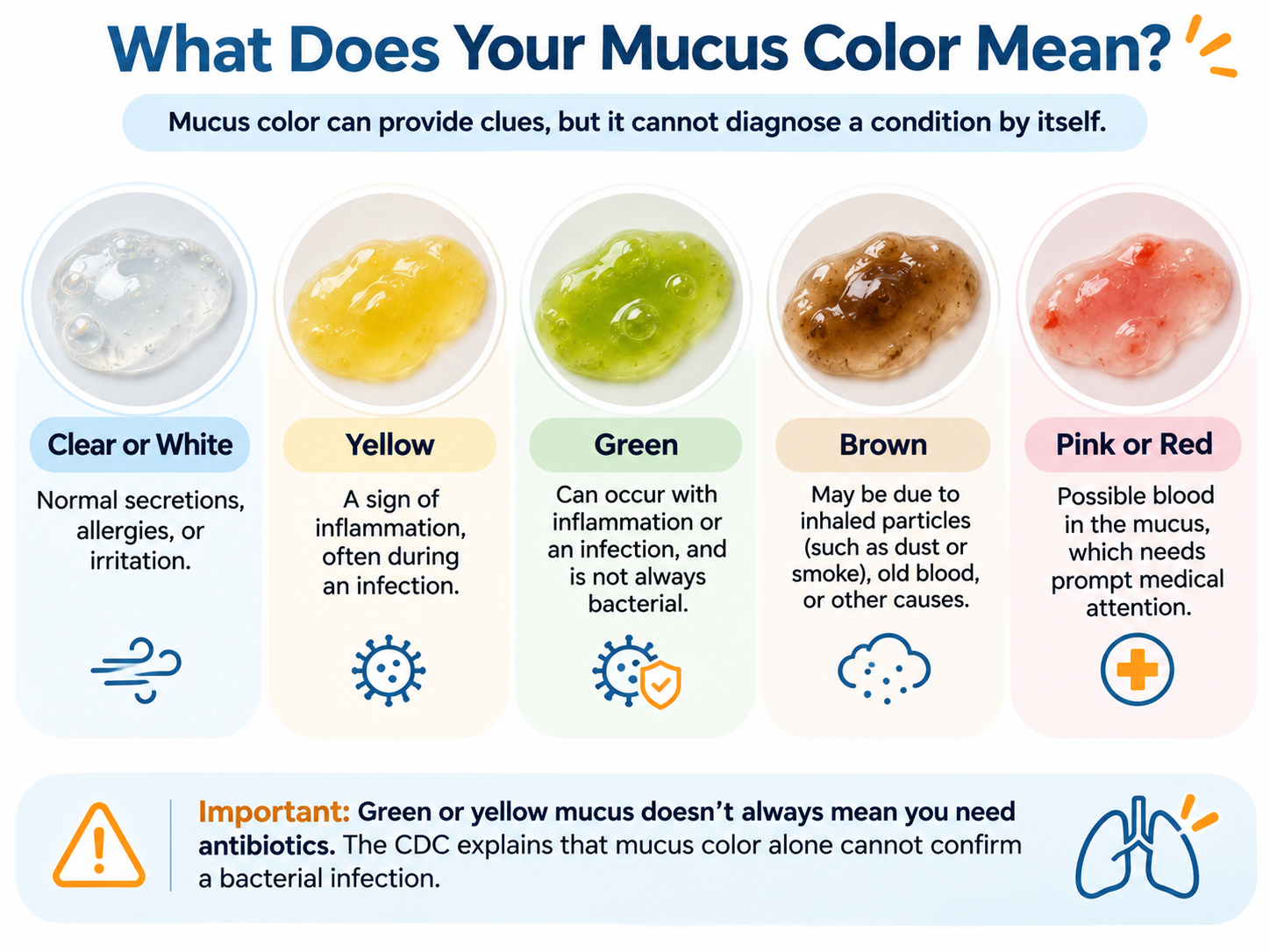
The colour can change from day to day. It might be clear, white, yellow or green.
That doesn’t necessarily tell you what illness you have.
Clear or white mucus can occur with normal secretions, allergies or irritation. Yellow and green mucus can appear when your airways are inflamed, including during infections. Brown mucus can sometimes be linked to inhaled particles or old blood.
Pink, red or blood-streaked mucus needs prompt medical assessment.
One thing worth knowing: green mucus doesn’t automatically mean you need antibiotics. The CDC explains that mucus colour alone cannot confirm a bacterial infection.
When Is a Morning Cough Worth Getting Checked?
If you’re recovering from a cold and the cough is gradually improving, it may settle on its own.
In India, see a doctor or visit a health centre if a cough lasts two weeks or more. The Central Tuberculosis Division lists a persistent cough of this length as a reason to be assessed for tuberculosis (TB). Having a cough does not mean you have TB.
Get checked sooner if you’re becoming more breathless, getting repeated chest infections, losing weight without trying, or developing a persistent fever or night sweats.
A cough lasting eight weeks or longer in adults is generally described as chronic. The European Respiratory Society’s guidelines, published by Dr. Alyn H. Morice and colleagues, explain why doctors investigate the possible causes of a long-lasting cough.
Get urgent medical advice for even a few blood streaks in your phlegm. Get emergency help now if you cough up more than a few spots or streaks of blood, cough up blood with trouble breathing or chest pain, or have severe difficulty breathing. See the NHS guidance on blood in phlegm.
What Can You Do About Morning Mucus?
There isn’t one remedy that works for every type of cough. The right approach depends on what’s causing it.
Staying hydrated may help make thick mucus easier to clear. Avoiding smoking, secondhand smoke and irritating fumes can also make a difference.
If allergies are causing postnasal drip, treating the nasal problem may help reduce the cough.
And if you already have a lung condition, stick to your prescribed treatment and tell your doctor if your symptoms have changed.
Avoid taking antibiotics unless they’re recommended by a healthcare professional.
A Note on Respiratory Care From Medikop
Most people who cough up mucus in the morning don’t need breathing equipment.
However, some patients with advanced lung conditions develop breathing problems that require specialist support.
In certain situations, doctors use non-invasive ventilation (NIV). This provides breathing support through a ventilator and a suitable mask.
NIV isn’t a treatment for an ordinary morning cough.
At Medikop LifeScience Global Private Limited, we manufacture respiratory care products, including NIV full-face and nasal masks, for appropriate clinical use.
You can explore our products at medikoplifescience.in.
Frequently Asked Questions
Is coughing up mucus every morning normal?
Making mucus is normal. But if you’ve been coughing for two weeks or more, get it checked. Seek advice sooner if you are more breathless, notice blood or develop other warning signs.
Could morning mucus be an early sign of COPD?
It can be, especially if you also have breathlessness or wheezing. But a morning cough alone doesn’t mean you have COPD. A doctor will need to assess you and carry out appropriate tests.
Why do I have thick mucus every morning when I’m not sick?
Allergies, postnasal drip, smoking, reflux and ongoing airway irritation are a few possible explanations.
Does green mucus mean I need antibiotics?
No. Green mucus can occur with different types of inflammation and infection. Its colour alone doesn’t tell you whether antibiotics will help.
Medical References
American Lung Association: Mucus and Lung Health
Morice AH, et al. (2020): European Respiratory Society Chronic Cough Guidelines
GOLD: International COPD Guidelines
National Heart, Lung, and Blood Institute: Bronchiectasis Symptoms
CDC: Respiratory Infections and Antibiotic Guidance
About This Article
Publisher: Medikop LifeScience Global Private Limited
Sources checked: November 2026
This article draws on published research and guidance from established medical organizations. The cited researchers and organizations have not reviewed or endorsed this article. Independent physician review has not been conducted.
Medical disclaimer: This article is for general education and does not replace professional medical advice, diagnosis or treatment.